





By Aubrey Wilcox, PA-C |
Sculptra & Radiesse
Exploring How Each Biostimulator Works Before Making the Selection For Yourself
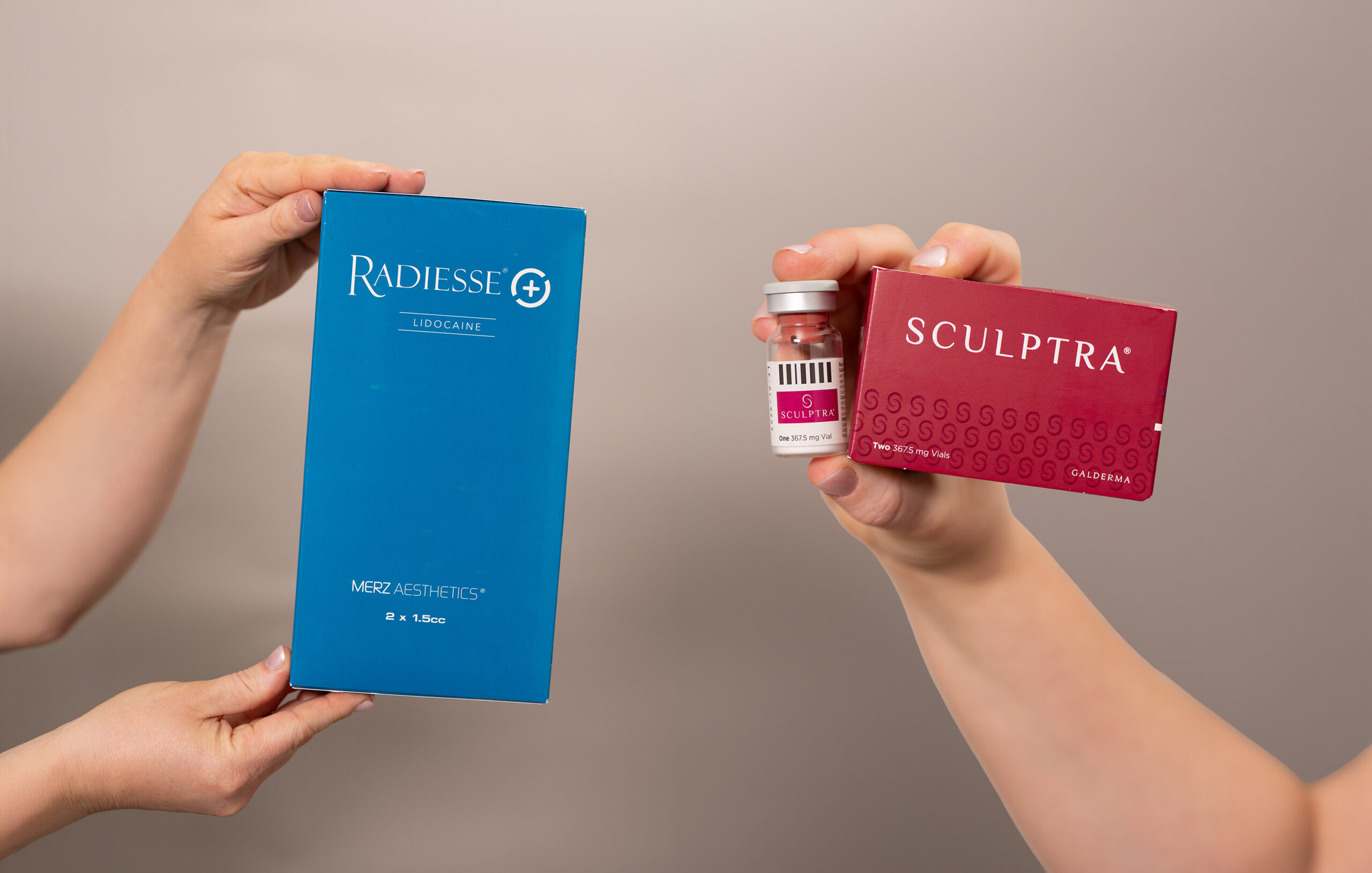
Two treatment names often pop up when patients begin researching injectables beyond traditional filler: Sculptra and Radiesse. Both fall under a growing category called “biostimulators” — advanced injectable treatments that work with your body to build new collagen rather than simply filling space.
This article breaks down how each one works, where they overlap and how our providers approach the Sculptra vs. Radiesse decision with patients.
Key Clinical Takeaways
- Biggest Core Difference: Both help the body build its own collagen, but Sculptra works gradually while Radiesse gives you volume immediately and keeps working from there.
- How To Choose: This is dependent on the specific concern; a deeper hollow spot tends to call for an immediate solution, while gradual thinning or skin laxity may respond better to a slower-acting solution that lasts longer.
- Biostimulators vs. Filler: Both can achieve similar results (increased volume, smoother lines); filler takes up the space instantly (often with hyaluronic acid), while biostimulators leverage collagen production and build volume over time.
What Are The Differences Between Sculptra & Radiesse?
Sculptra works exclusively by stimulating collagen production with no immediate volume. It takes about 3 months to show results and lasts 1 to 2+ years. Radiesse shows results immediately, holds for about 12 months (longer with touch-ups) and adds both instant volume and long-term collagen support.

Neither Treatment is Reversible with Hyaluronidase
Many providers intentionally dose conservatively and iteratively, often leaning on a thorough patient history to avoid complications.
Sculptra’s signature risk is a delayed nodule, tied closely to how well a patient follows the post-treatment massage routine. Radiesse carries the same rare vascular risks common to all filler injections.
Practical Insight
Which Biostimulator is Used More Often
- Radiesse: 64.3%
- Sculptra: 35.7%
Source: Anonymized practice and inventory data using total individual treatment sessions at Donaldson Plastic Surgery from 1/1/2025 to 8/31/2026.
What Is Sculptra?
Sculptra is a poly-L-lactic acid (PLLA) biostimulator that works purely by stimulating collagen; it doesn’t add any volume on its own. Once injected, PLLA microparticles draw fibroblasts to the treatment area. This triggers the body to produce Type I and Type III collagen over the following months.
The result is a gradual thickening of the skin that builds slowly and holds significantly longer than traditional filler.
The Quick Facts About Sculptra
- Onset of Results: Gradual; visible improvement begins around 3 months, full effect by 6+ months
- Duration of Results: 1 to 2+ years
- Key Ingredient: Poly-L-Lactic Acid (PLLA)
- Mechanism: Stimulates the body’s own Type I and Type III collagen production
-
Sculptra isn’t recommended for patients who:
- Are immunocompromised or pregnant
- Currently take anti-inflammatory medications or steroids
- Have a history of keloid scarring or known PLLA sensitivity
Because the treatment can’t be reversed, a thorough health history is essential before treatment begins.
-
Most patients experience some injection-site swelling, bruising and tenderness immediately after treatment. This is common and usually well-tolerated. Sculptra’s “signature risk” is a delayed subcutaneous nodule, most often linked to insufficient post-injection massage.
-
- Cheek wrinkles
- Nasolabial folds
- Marionette lines
- Chin wrinkles
- Periocular and submalar wrinkles
- The correction of the pyriform fossa (the hollow area beside the nose)
-
Some providers use Sculptra off-label for:
- The temples
- Jawline and neck
- Décolletage and crepey skin
- Scarring
- Buttock or hip dip contouring (very conservatively)
What Is Radiesse?
Radiesse is a calcium hydroxylapatite (CaHA) biostimulator with a two-phase mechanism. It delivers volume immediately and then keeps working, unlike Sculptra’s collagen-only approach. When CaHA “microspheres” are suspended in a gel carrier, they can provide mechanical correction the same day as treatment — similar to what you’d see with an HA filler.
The CaHA microspheres remain in place and continue stimulating the body’s own collagen production as the gel carrier absorbs over the following months.
The Quick Facts About Radiesse
- Onset of Results: Partially immediate, with continued improvement over the following months
- Duration of Results: About 12 months, extending to 18 to 30 months with touch-ups
- Key Ingredient: Calcium Hydroxylapatite (CaHA)
- Mechanism: Some immediate mechanical volume, followed by collagen stimulation as the gel carrier resorbs
-
Radiesse isn’t appropriate for patients with:
- A severe allergy history (including anaphylaxis)
- Known allergy to gram-positive bacterial proteins or lidocaine
- An active infection at the treatment site
-
Expected effects include swelling, bruising, firmness or lumps, and discoloration at the injection site, along with some tenderness during movement like chewing or smiling. These are common side effects and are typically well-tolerated by patients.
Vascular occlusion and vision changes are rare but serious risks associated with any filler injection, Radiesse included.
-
Radiesse is FDA-approved to treat:
- Moderate to severe facial folds
- HIV-related facial fat loss
- Hand augmentation for volume loss on the back of the hand
- Jawline contour (via Radiesse (+), for patients 21 and older)
- Décolletage wrinkles (for patients 22 and older)
Radiesse was granted décolletage approval in April 2026, making it among the first regenerative biostimulators FDA-approved for both facial and body use.
-
Aesthetic treatment providers have used Radiesse off-label in the lips, though safety and effectiveness haven’t been established there and nodule formation has been reported. Other off-label uses include the temples, chin and other facial zones.
Some providers even offer a hyperdiluted version of Radiesse as a “skin quality” technique for overall texture.
A Quick Refresh
What Is a Biostimulator?
A biostimulator is an injectable that works with the body’s natural ability to produce collagen in a targeted area instead of mechanically displacing tissue for instant volume the way a hyaluronic acid (HA) filler does.
Biostimulators vs. Filler: Two Modalities to Effectively Address Volume Loss
Biostimulator results build over weeks to months, then hold significantly longer than most traditional fillers. Both approaches can achieve similar results; they just take different roads to get there. That distinction is one Aubrey walks her patients through often.
“Filler & biostimulant will produce the same results — volume, plumpness, smoothing of fine lines — but they achieve this in very different ways. Biostimulants signal your body to produce its own collagen, which takes time. Filler uses hyaluronic acid to instantly add volume & shape. Same result, but very different ways of getting there.”
— Aubrey Wilcox, PA-C
How Do Providers Choose Between A Biostimulator & Filler?
This decision typically comes down to what’s changing in a patient’s skin. A deeper hollow space calls for something with immediate volume, while gradual thinning or skin laxity tends to respond better to a treatment that works with the body over time.
The answer isn’t always “one or the other” either. Plenty of patients see their best results from combining a biostimulator with traditional filler.
“If you have a specific hollow or sunken area that bothers you, filler is useful because you get instant volume & immediate results. If it is thinning or skin laxity that you are beginning to notice, biostimulators may be best to help signal the body to produce collagen over time. You just have to be willing to play the long game with biostimulators.”
— Aubrey Wilcox, PA-C
Practical Insight
Which Modality is Used Most Often
- Dermal Filler: 95.6%
- Biostimulator: 4.4%
Source: Anonymized practice and inventory data using more than 600 individual treatment sessions at Donaldson Plastic Surgery from 1/1/2025 to 8/31/2026.
A Personal Choice
Patient Preference Plays a Role, Too
Each modality carries its own clinical strengths. But some patients want to find a solution that also lines up with how they want to approach aging itself. Safety, effectiveness for the specific concern and patient comfort still come first, but that alignment is worth paying attention to.
“Our patients tend to fall along a spectrum. Some simply want the most effective treatments out there. Others prefer the holistic undertones of biostimulators. Some individuals want to avoid introducing anything foreign to their bodies — they often opt for microneedling. And, of course, you have those that prefer a lifestyle-only approach, which is where I see a lot of our functional medicine patients.”
— Aubrey Wilcox, PA-C
About The Author
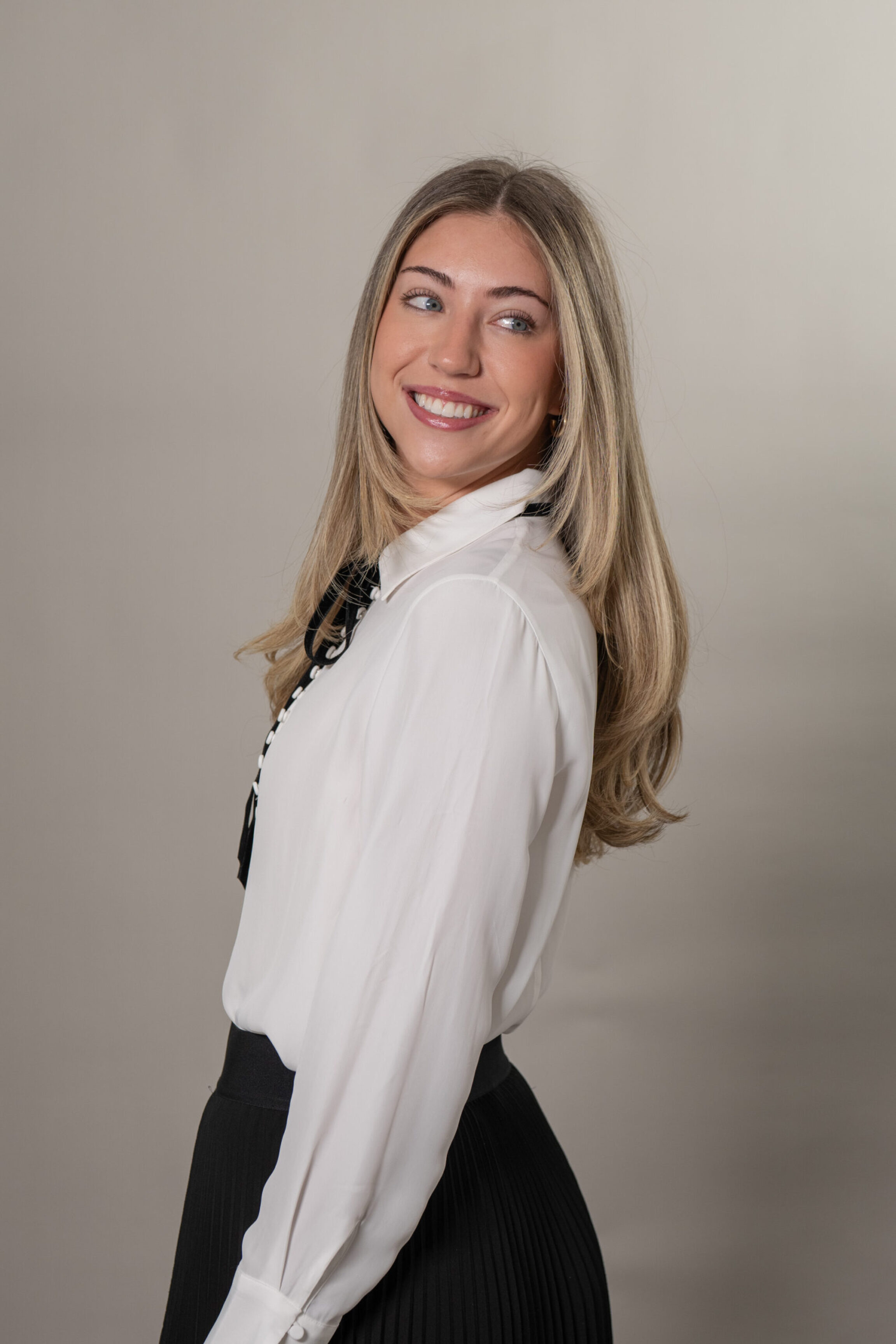
Aubrey Wilcox, PA-C, MSPAS, is a credentialed injectables specialist in Columbus, Ohio, with expertise that includes Botox, filler, biostimulators and more. Her clinical background spans general surgery, plastic surgery and functional medicine, giving her a uniquely comprehensive read on when a patient needs immediate correction versus a treatment that works with the body over time.
Aubrey approaches every consultation collaboratively, helping patients love their skin more and understand it better.
Related Articles

Read More Episode 15: The Art of Cosmetic Tattooing & Laser Skin Treatments
Episode 15: The Art of Cosmetic Tattooing & Laser Skin Treatments
Have you ever wondered what your provider is actually thinking when you walk in? Paige, Andie & Dr. Weston get into all of it — cosmetic tattooing, laser treatments, scar camouflage & more!

Read More How Often Should You Reapply Sunscreen for Oily Skin?
How Often Should You Reapply Sunscreen for Oily Skin?
A science-backed reapplication routine for oily skin is rooted in finding the best formula for your unique skin health & following real-world SPF best practices.

Read More Episode 6: Facial Plastic Surgery at 20, 30, 40 & Beyond
Episode 6: Facial Plastic Surgery at 20, 30, 40 & Beyond
Your favorite podcast crew highlights some of the most popular surgical procedures & nonsurgical treatments for facial rejuvenation.