





By Jillian Birkle |
Episode 15: The Art of Cosmetic Tattooing & Laser Skin Treatments
What Aesthetic Treatments Actually Look Like When You're in the Chair

Most people have a vague idea of what Botox, laser treatments, or cosmetic tattooing are — but few know what the experience actually feels like, or how personal these decisions can get.
Host Jillian Birkle sits down with two of our most versatile providers — Paige Brudzinski, RN, and Andie Schroeder, LME — for a candid conversation about aesthetic medicine, as Dr. Weston joins as a fellow curious patient as much as a medical expert.
This one is for anyone who’s ever wondered what their provider is actually thinking when you walk in the door and those who are looking for treatments with minimal downtime that can help resolve long-term concerns.
Quick Takes
-
Lip blushing tattoo defines the vermilion border and can create the illusion of fuller lips without any injectable volume, which surprises a lot of patients who thought filler was the only option.
-
To reach adequate coverage, you’d need to apply far more moisturizer than anyone realistically does. A standalone sunscreen, ideally mineral or physical, is the only way to know you’re getting the protection on the label.
-
Patients who spend part of every morning drawing on their brows report waking up feeling put together immediately, and many stop wearing makeup altogether.
-
Providers can dose lightly and selectively so you keep natural movement, and it’s always easier to add more at a follow-up than to undo it.
-
Starting light neurotoxin in your late 20s or early 30s delays the point at which deeper correction is ever needed.
-
Paramedical tattooing can neutralize hyperpigmented scars, add pigment to hypopigmented ones, and has helped patients wear short sleeves for the first time after years of covering self-harm scars.
-
The best providers actively decline requests they believe will look overdone or aren’t in the patient’s best interest, because every patient is a walking advertisement for their work.
-
Cleanser, moisturizer, and sunscreen in the morning is a complete routine. Everything else is optional enhancement.
-
Injecting the masseter and temporalis muscles can resolve tension headaches while also slimming the jawline, and many patients notice relief almost immediately.
-
Providers at practices like Donaldson aren’t paid on production, so they routinely refer patients to a colleague whose treatment better fits the actual concern, even when that means giving up the appointment.
Heard Something That Resonated?
That curiosity is worth following. Whether you have one question or ten, we’d love to hear what’s on your mind and help you figure out your next step.
The Questions We Cover In This Episode:
- What does a day in the life actually look like for an aesthetic injector and a cosmetic tattoo artist?
- How much time does cosmetic tattooing save in your morning routine?
- Should I get lip blushing or lip filler first?
- What is scar camouflage, & what types of scars can actually be treated?
- What are some of the lesser-known places you can get Botox?
- When should you start getting Botox?
- How do providers at Donaldson collaborate on treatment plans — & why does it matter?
- Is it normal to be anxious about injectables? What happens if you almost pass out?

The Services & Treatments We Dig Deeper Into
- Cosmetic Tattooing & Paramedical Tattooing
- Neurotoxins (BOTOX, DAXXIFY®, Dysport®)
- Laser Skin Treatments (BBL®, MOXI®, HALO®)
- Lip Filler
OUR PROVIDERS
Meet The Women In Your Corner

Paige Brudzinski, RN, BSN
Renowned Aesthetic Provider
Paige brings more than six years of NICU nursing to her aesthetic practice — a background that shapes her precision, her patience and genuine investment in every outcome. Her injector reputation speaks for itself: patients lovingly call getting treated by her “punished by Paige,” which (in this industry) is the best kind of reputation to have.

Andie Schroeder, LME
Medical Aesthetician & Cosmetic Tattoo Specialist
Andie is a licensed cosmetic tattoo artist and medical aesthetician whose range of expertise spans from clinical skincare and facials to paramedical tattooing, scar camouflage and lip blushing. She leads with trust, a science-backed process and a genuine passion for natural, undetectable results.

Marguerite Weston, MD, IFMCP
Functional Medicine Director
Dr. Weston is dual board-certified in Family Medicine and Sports Medicine and has been a functional medicine patient herself, which gives her a uniquely honest lens on all things wellness and aesthetics. In this episode, she shows up the way most of us do: with questions, opinions and a very relatable skincare routine.

Jillian Birkle
Host of the Podcast
Asking For a Friend host, bringing the questions patients are already thinking but haven’t had the chance to ask out loud. Jillian is an aesthetics treatment patient, always on the search for the things that work and match her lifestyle. That means no crazy services that require too much downtime from the camera!

Should I Get Lip Blushing or Lip Filler — Or Both?
Lip blushing addresses definition; that gradually fading border around the lip that softens with age. Lip filler addresses volume. They work beautifully together, but the order matters.
Andie prefers to start with lip blushing when a patient hasn’t had filler, because cosmetic tattoo pigment lasts longer than filler does. Tattooing to a patient’s natural anatomy, rather than to their filled anatomy, produces a more accurate, lasting result.
For patients already considering filler, Paige’s approach is similar: she’ll often steer them toward a lip blushing consultation first to see if definition alone gets them where they want to be. Many patients discover it does.
“I always prefer to do lip blushing first if they don’t have any filler because that tattoo is going to last longer than your filler will. I want to make sure that we’re matching your actual anatomy & not what your filler has maybe adjusted a little bit.”
-Andie Schroeder, LME

What Is Scar Camouflage?
Scar camouflage (also called paramedical tattooing or micropigmentation) is a form of therapeutic tattooing that has the unique ability to change lives in ways that are genuinely hard to overstate.
The technique works by either neutralizing or adding pigment to a scar, depending on whether it’s hypopigmented (lighter than surrounding skin) or hyperpigmented (darker). When the scar also has texture, Andie may recommend a pre-treatment step (an inkless revision, a laser treatment or Morpheus8) to smooth the surface first, then address color.
What Kinds of Scars Can Be Treated?
Treatable scars include surgical scars, trauma scars, burn scars, self-harm scars, mole removal scars and more. Patients travel from outside the practice and outside the city, specifically for Andie’s work.
The emotional weight of this treatment deserves its own mention. Andie has had patients who haven’t worn short sleeves or shorts in years. When they leave her chair, they do so with the power to leave that stage in their life behind them.
Clinical Note: Not every scar is ready to be treated immediately. Andie’s consultations are thorough for a reason: she assesses whether the scar and the patient are ready for the process before any treatment plan is made.
“Emotionally, a lot goes into a scar, especially a self-harm scar. It’s like a new chapter. It’s like ending that identity that you had.”
-Andie Schroeder, LME

What Are Some of the Lesser-Known Places You Can Get Botox?
Most patients come in knowing about the forehead, the crow’s feet and the glabellar lines (the “11s”). But there’s a full lower face and neck vocabulary that’s become increasingly popular. Paige walks through this modality in this episode.
- The DAOs (depressor anguli oris muscles) pull the corners of the mouth downward; treating them can gently lift a resting expression.
- The Nefertiti neck lift uses neurotoxin along the jawline to define and cinch.
- The mentalis (chin) is a great pairing when adding chin filler, helping relax a tight muscle so filler sits properly.
- The platysmal bands (the visible cords along the neck) respond well to neurotoxin, smoothing the skin and improving overall neck definition.
And then there’s the masseter and temporalis — which Paige flags as one of her personal favorites for a reason well beyond aesthetics. Jaw clenching (bruxism) and TMJ-related morning headaches are legitimate medical applications for neurotoxin.
“You could just do Botox just to see if it helps — even to answer the question of why you’re having the headaches. If your headaches improve in the morning and you’re not clenching, that’s the answer.”
-Paige Brudzinski, RN, BSN
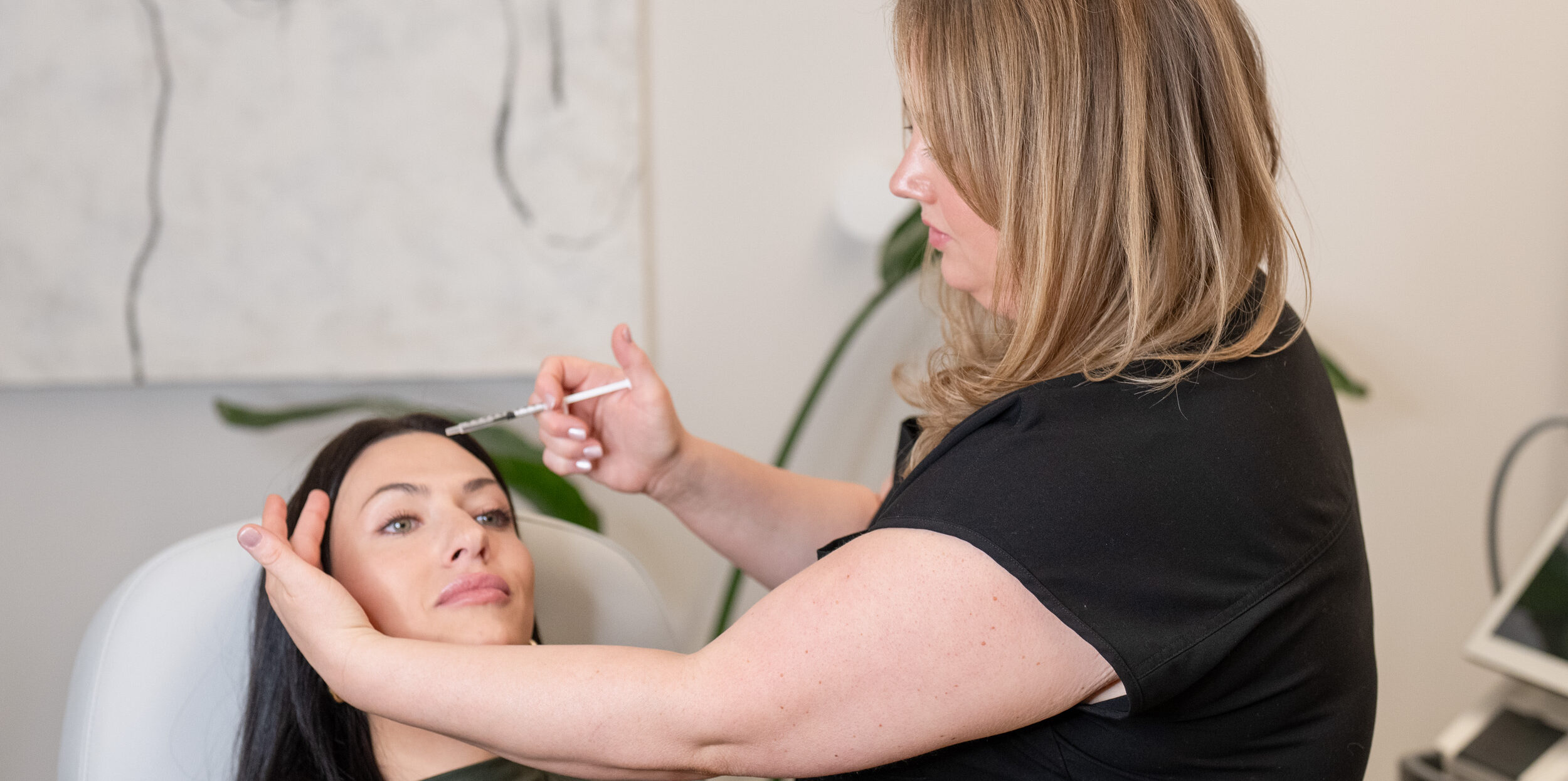
When Should You Start Neurotoxin?
There’s an important clinical distinction between dynamic wrinkles (lines that appear when your face moves) and static wrinkles (lines that are present even at rest). Dynamic wrinkles are normal — they mean your face has expressions. Static lines develop over time as repeated muscle movement deepens the crease.
Addressing Symptoms Early Requires Lighter Treatments Long-Term
The earlier you address dynamic lines you’d prefer not to set in, the lighter the treatment can be. A patient in their late 20s who notices forehead lines only when they raise their eyebrows needs a very different intervention than someone in their 60s addressing lines that have already set.
Starting “Low & Slow” is Always an Option
Paige regularly starts new patients on a single area they’re most concerned about, gives them a feel for how neurotoxin behaves in their face, and builds from there. Movement is always a conversation; some patients want it, some don’t.
“It’s always easier to add more neurotoxin. You can’t take it away. So we can start low & slow — & you get a feel for how it feels.”
-Paige Brudzinski, RN, BSN
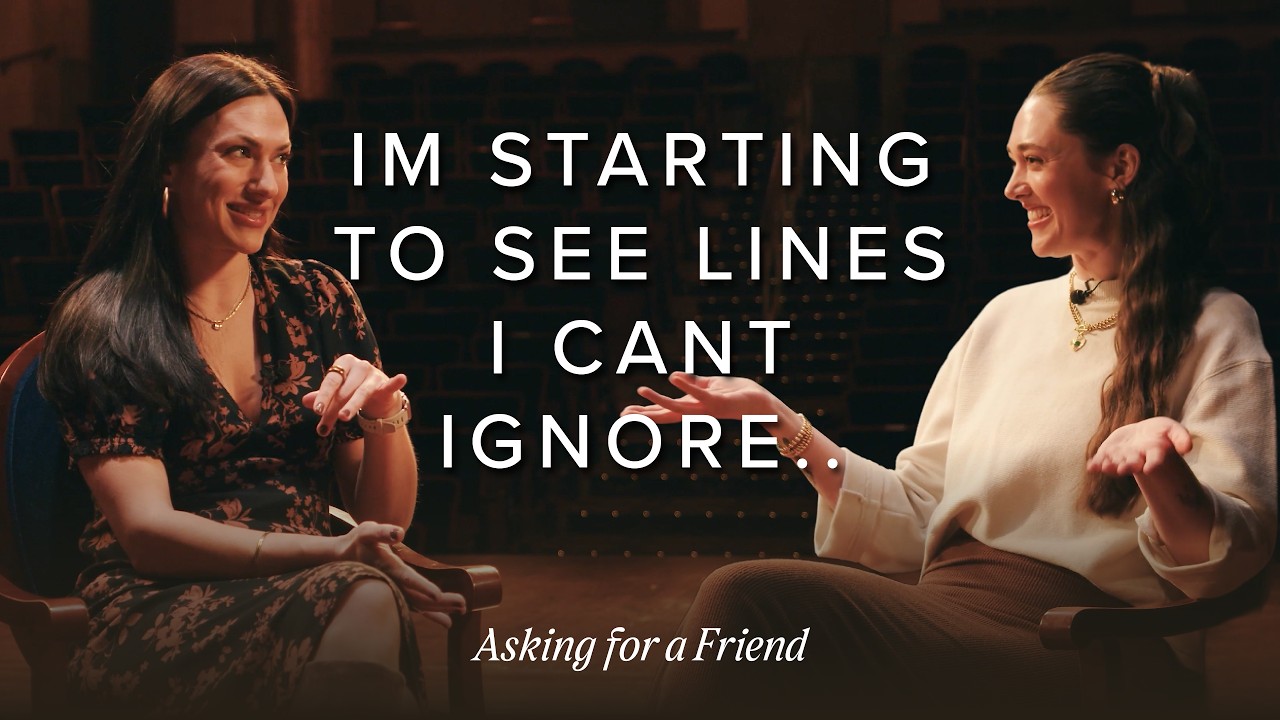
About The “Asking For A Friend” Podcast
This episode goes deep on cosmetic tattooing for brows and lips, scar camouflage treatments and laser skin care — but “Asking For a Friend” covers far more than aesthetics.
Past episodes have tackled hormone replacement therapy and menopause, medical weight loss and semaglutide, gut health and the plastic surgery process from consultation to recovery. No matter which pillar of confidence you’re curious about, there’s an episode that was made with your questions in mind!
Subscribe On Your Favorite Platform!
- 🍎 Apple Podcasts
- 🎵 Spotify
- 🛒 Amazon Music
- ❤️ iHeartRadio
Related Articles

Read More Episode 17: Labiaplasty Explained: Recovery, Technique & When To Consider It
Episode 17: Labiaplasty Explained: Recovery, Technique & When To Consider It
Dr. Sieffert answers the questions women actually search for — in a way that only she can! No judgment or clinical distance. Just straight answers about this sensitive, yet powerful, procedure.

Read More Sculptra & Radiesse
Sculptra & Radiesse
Aubrey Wilcox, PA-C, explores the key differences between 2 of the most popular cosmetic biostimulators & how she helps patients choose the right solution.

Read More Episode 16: “Why Am I Always So Tired?” We Know. Here’s Why.
Episode 16: “Why Am I Always So Tired?” We Know. Here’s Why.
This episode digs deep into the science behind sleep, helping you discover the root cause of middle-of-the-night disturbances & finally feel good in the morning.