






Masseter Botox Columbus, Ohio
Slim Your Jawline & Relieve Jaw Tension With a Single Treatment
The masseter muscle is one of the strongest muscles in the human body, and when it’s overworked, it shows. Chronic clenching, teeth grinding and everyday stress can cause this powerful chewing muscle to bulk up, widening the lower face and creating persistent jaw tension.
Masseter Botox in Columbus, Ohio, is a targeted, nonsurgical treatment that relaxes the masseter to slim the jawline, ease discomfort and restore facial balance.
Quick Facts
Masseter Botox
-

Preparation Time:
No Prep Required
-

Treatment Time:
15-30 Minutes
-
Recovery Time:
No Downtime
-

When Full Results Show:
6–12 Weeks
-

Full Results Last:
3–6 Months
What Is Masseter Botox?
Masseter Botox uses the same botulinum toxin type A found in traditional Botox Cosmetic. Instead of targeting facial wrinkles, it’s injected directly into the masseter muscles at the angle of the jaw. These muscles are responsible for clenching, chewing and grinding, and like any muscle that gets overworked, they can grow in size over time (a condition clinicians call masseter hypertrophy).

How Masseter Botox Works & What Results Look Like
When botulinum toxin is placed into the masseter, it interrupts the nerve signals that trigger involuntary contraction. The muscle gradually relaxes and, over several weeks, begins to reduce in volume.
The result is twofold: a softer, more contoured jawline and meaningful relief from the tension, pain and fatigue associated with chronic clenching and bruxism.
This Is Not About “Freezing” Your Jaw
A common misconception is that masseter Botox will impair normal jaw function. In practice, the treatment is carefully dosed to reduce overactivity without affecting your ability to chew, speak or express yourself naturally. Your provider calibrates every injection to your unique anatomy and goals.

What to Expect During Your Appointment
A masseter Botox appointment at Donaldson is straightforward, comfortable and typically completed in fewer than 30 minutes.
-
01
Consultation & Assessment
Your appointment begins with a one-on-one conversation about your concerns, whether cosmetic, functional or both. Your provider will palpate your masseter muscles while you clench and relax your jaw, evaluating muscle size, symmetry and activity level. This hands-on assessment determines your injection plan and dosage.
-
02
The Injection Process
Using a fine-gauge needle, your provider will place several small injections into the thickest portion of each masseter muscle. Most patients describe the sensation as a brief pinch. The entire injection process takes just a few minutes.
-
03
More Informed Dosing
Treatment typically involves 20 to 40 units per side, depending on muscle size, strength and your individual goals. Your provider may start conservatively on your first visit and adjust at follow-up if needed.
This is intentional: a measured, iterative approach protects natural jaw function while achieving your desired results.
-
04
Aftercare & Downtime
There is no downtime. You can return to your normal routine immediately after your appointment. For the first 24 hours, avoid strenuous exercise, lying face down and rubbing or massaging the treated area. Your provider will share specific post-treatment instructions tailored to your plan.
Provider Spotlight
Meet Your Columbus, Ohio, Masseter Botox Specialists

Stacie Isler, PA-C
Patient Care Director
Stacie brings more than 15 years of plastic surgery experience to every appointment, including specialized training as the first PA to join the Ohio State University Department of Plastic Surgery. Her anatomical precision and science-forward approach make her especially well-suited for masseter Botox — where structural knowledge is critical to safe, balanced results.
Stacie brings more than 15 years of plastic surgery experience to every appointment, including specialized training as the first PA to join the Ohio State University Department of Plastic Surgery. Her anatomical precision and science-forward approach make her especially well-suited for masseter Botox — where structural knowledge is critical to safe, balanced results.

Paige Brudzinski, RN, BSN
Aesthetic Provider
Paige’s background in neonatal intensive care shaped an approach defined by patience and precision. She has completed cadaver lab training, ultrasound imaging and hands-on injection certification, bringing clinical depth well beyond a standard injector background. Her technique is ideal for patients seeking jawline refinement and functional relief from clenching.
Paige’s background in neonatal intensive care shaped an approach defined by patience and precision. She has completed cadaver lab training, ultrasound imaging and hands-on injection certification, bringing clinical depth well beyond a standard injector background. Her technique is ideal for patients seeking jawline refinement and functional relief from clenching.

Claire Hinkle, PA-C
Aesthetic Provider
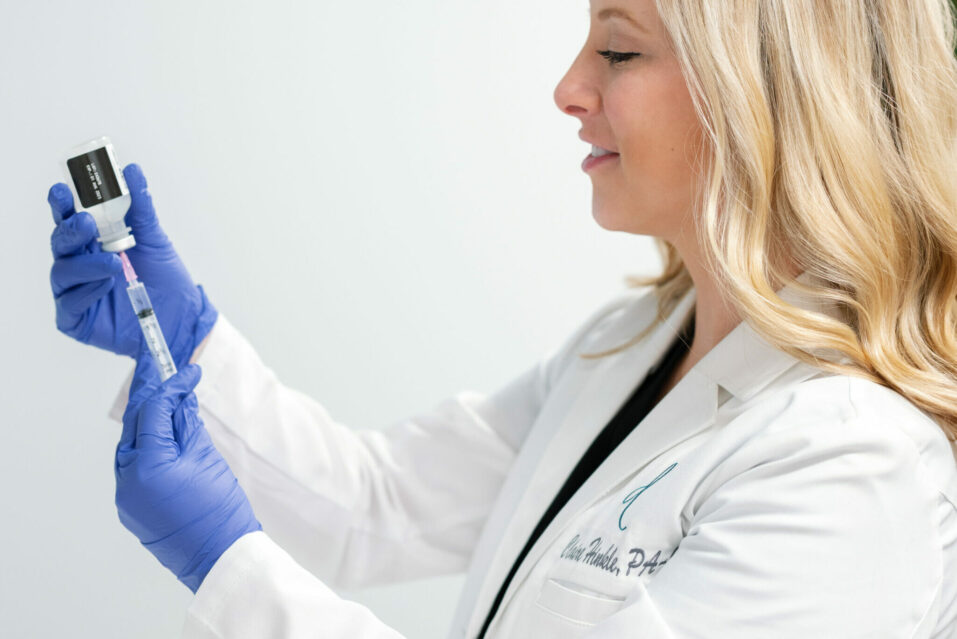
Claire spent six years supporting complex head and neck reconstructive surgeries at Rush University Medical Center, giving her an anatomy-forward understanding of facial structure that directly informs her meticulous masseter injection technique. Her calm, reassuring chairside manner makes her particularly well-suited for patients who are new to this treatment.
Claire spent six years supporting complex head and neck reconstructive surgeries at Rush University Medical Center, giving her an anatomy-forward understanding of facial structure that directly informs her meticulous masseter injection technique. Her calm, reassuring chairside manner makes her particularly well-suited for patients who are new to this treatment.
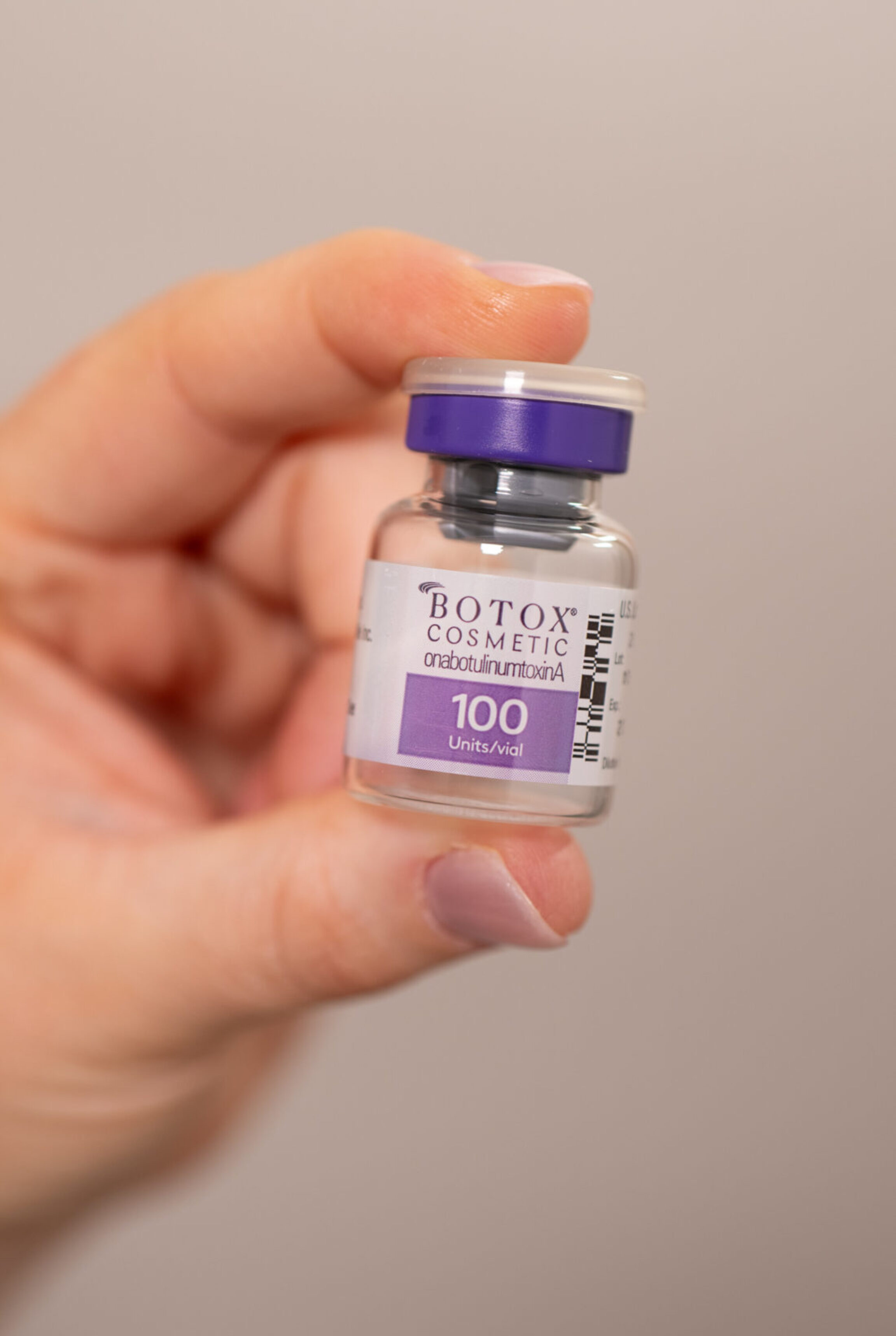
Masseter Botox vs. Traditional Botox: Same Product, Different Application
If you’ve had Botox for forehead lines or crow’s feet, the active ingredient in masseter Botox will be familiar: it’s the same botulinum toxin type A (onabotulinumtoxinA).
The Difference is Where & How It’s Applied
Traditional cosmetic Botox targets small, superficial muscles in the upper face and typically requires 10 to 30 total units across multiple areas. Masseter Botox, by contrast, addresses one of the strongest muscles in the body. The masseter is substantially thicker and more powerful than the frontalis or orbicularis oculi, which is why the treatment requires a higher unit count (typically 40 to 80 total units across both sides) and a deeper injection technique.
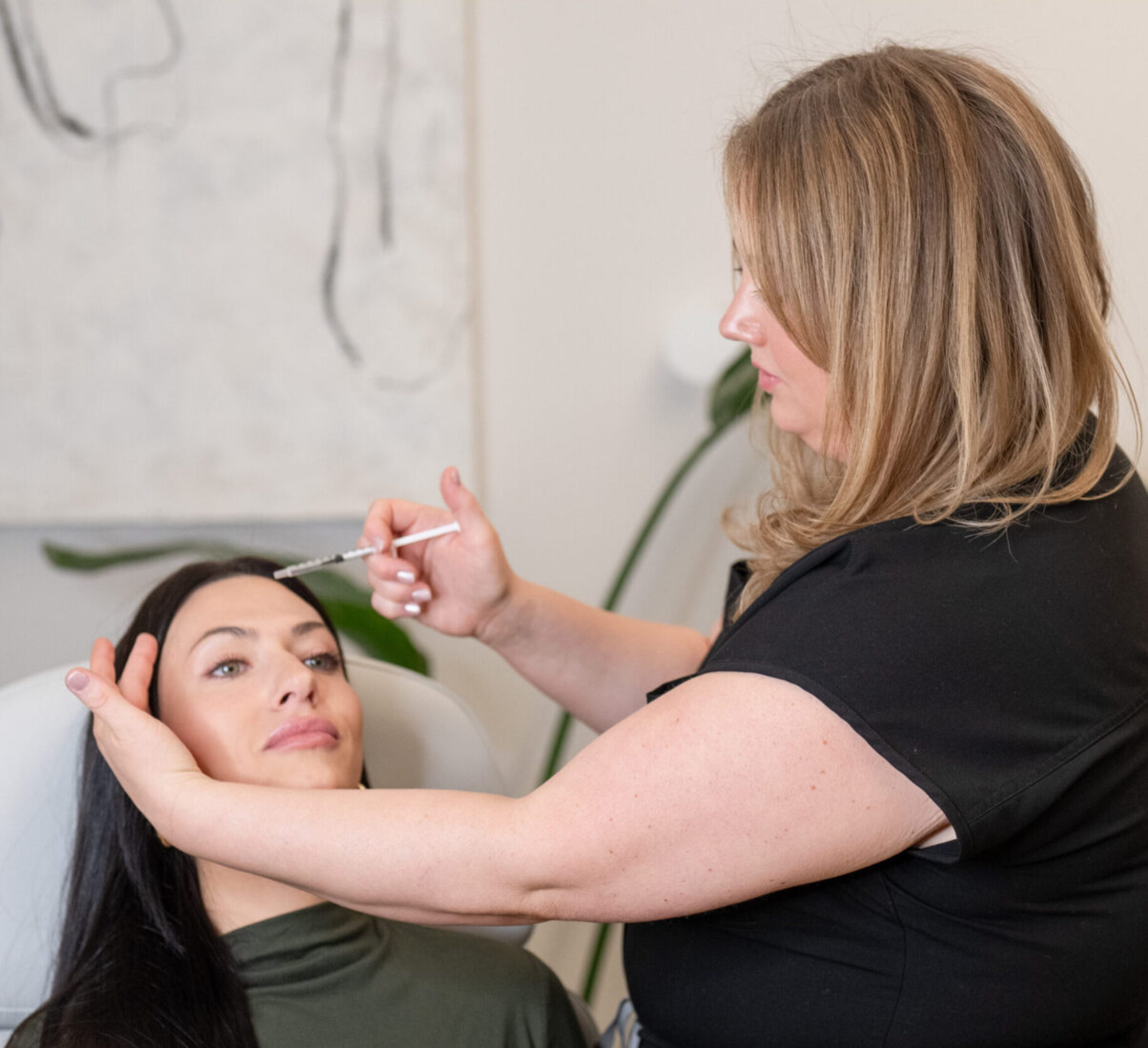
Why Injector Expertise Matters Even More Here
Precision is vital here because the masseter sits near a number of highly sensitive systems, including the parotid gland, the facial nerve branches and the zygomaticus muscles (responsible for your smile). An experienced injector understands exactly where to place the product within the safe zone of the muscle belly to maximize results while avoiding diffusion into adjacent structures.
This is one of the reasons Donaldson’s providers bring surgical-level anatomical training to every injectable treatment they perform.
Frequently Asked Questions About Masseter Botox
-
Masseter Botox can provide meaningful relief from muscle-based TMJ symptoms, including jaw soreness, tension, clenching-related headaches and facial fatigue. It works by reducing the intensity and frequency of involuntary masseter contractions, which are a common driver of temporomandibular discomfort.
Note: TMJ disorders encompass a broad spectrum of conditions, some of which involve the joint capsule, disc or surrounding ligaments rather than the muscle alone. Botulinum toxin is most effective when the primary source of discomfort is muscular overactivity.
For patients with more complex TMJ pathology, your provider may recommend complementary interventions such as an oral appliance, physical therapy or referral to a TMJ specialist. A thorough consultation will help clarify whether your symptoms are muscular in nature and whether masseter Botox is the appropriate first step.
-
Jawline slimming occurs through a process called “disuse atrophy.” When botulinum toxin reduces the contractile activity of the masseter muscle, the muscle receives fewer activation signals and begins to decrease in volume over time, much the same way any muscle loses mass when it is no longer being actively trained.
The masseter is a uniquely responsive target because its hypertrophy is frequently driven by involuntary overuse (clenching, grinding, stress-related tension), meaning that even a modest reduction in contraction intensity can produce a visible change in lower facial width.
Most patients begin to notice softening of the jawline within 4 to 6 weeks, with peak contouring visible at approximately 8 to 12 weeks post-treatment.
The degree of slimming depends on the starting volume of the muscle, the dosage administered and the patient’s underlying skeletal anatomy. In patients where jawline width is primarily muscular (rather than skeletal), the aesthetic difference can be striking.
-
Most patients receive between 20 and 40 units per side, placing the total treatment in the range of 40 to 80 units.
The exact dosage is determined by several factors:
- The thickness and strength of your masseter muscles (assessed by palpation during your consultation)
- Whether your primary goal is cosmetic contouring or functional relief
- Your history with neurotoxin treatments
- Any existing asymmetry between the left and right masseter
First-time patients are often started at a conservative dose. Your provider may schedule a follow-up at two to four weeks to evaluate the initial response and determine whether additional units are needed. Over subsequent treatments, many patients find that they require fewer units as the muscle adapts and maintains a reduced profile.
-
This treatment is considered well-tolerated among our patients, with most describing the sensation as a brief pinch or pressure at each injection point. The masseter is a thick, well-vascularized muscle, and the fine-gauge needles used for this treatment are designed to minimize discomfort.
The entire injection process typically takes just a few minutes. No topical anesthesia is required for most patients, though it can be applied upon request.
Bruising is uncommon but possible, as with any injectable procedure. If you are nervous about the needle component, our providers are experienced at making the process as comfortable as possible, and we offer Pro-Nox (a nitrous oxide delivery system) for patients who prefer additional in-office comfort during aesthetic treatments.
-
A single masseter Botox treatment typically lasts between 3 and 6 months. The duration depends on individual metabolism, the dosage administered and the degree of underlying muscle activity.
Because the masseter is a large, powerful muscle that is engaged throughout the day (during chewing, speaking and unconscious clenching), the botulinum toxin may metabolize somewhat faster here than in smaller facial muscles like the frontalis. Many patients schedule maintenance treatments every 3 to 4 months initially.
With consistent treatment, the masseter muscle adapts to a reduced state of activity and some patients find they can extend the interval between appointments.
-
Initial effects (reduced clenching intensity, less jaw tightness) are typically noticeable within 1 to 2 weeks. Visible jawline slimming develops more gradually. Most patients see early contouring changes at 4 to 6 weeks, with peak results at approximately 8 to 12 weeks.
This timeline reflects the biology of the treatment: botulinum toxin reduces muscle contraction quickly, but the muscle itself takes several weeks to physically decrease in volume through disuse atrophy.
Patients pursuing masseter Botox primarily for functional relief (TMJ tension, bruxism) tend to notice improvements sooner than those focused exclusively on cosmetic contouring.
-
No. When administered at the appropriate dosage by an experienced provider, masseter Botox does not impair normal chewing, speaking or other everyday jaw function. The goal of treatment is to reduce involuntary overactivity (clenching, grinding), not to eliminate voluntary muscle function.
Some patients notice a mild sense of chewing fatigue with very tough or chewy foods in the first few weeks after treatment, but this is temporary and resolves as the muscle adjusts. Your provider carefully calibrates the dosage to relax the masseter without compromising the functional capacity you need for daily life.
Clinical studies have consistently demonstrated that masticatory performance (the ability to break down food effectively) is preserved at standard therapeutic doses.
-
A typical masseter Botox treatment ranges from 40 to 80 total units, placing most sessions between $600 and $1,200. The exact cost highly depends on your individual anatomy, the degree of muscle hypertrophy and your treatment goals, which is why the range is so wide here.
We recommend scheduling a consultation to receive a personalized treatment plan and accurate cost estimate. During your visit, your provider will assess your masseter muscles, discuss your goals and outline the number of units recommended for your first session.
A Note on Value
Masseter Botox is an investment in both aesthetics and daily comfort. Patients who have been managing chronic jaw pain, headaches or bruxism-related dental damage often find that the cost of treatment compares favorably to ongoing expenses like custom night guards, pain medication and dental repairs.
-
Yes. Masseter Botox pairs well with several complementary treatments, depending on your goals. Patients interested in further refining their lower face contour may benefit from chin and jawline filler, which adds structural definition that complements the slimming effect of the Botox. Kybella can also be used to dissolve stubborn fat in the chin region.
For patients focused on overall facial rejuvenation, combining masseter Botox with traditional Botox for the upper face (forehead, crow’s feet, glabella) or dermal fillers in other areas can be done in the same appointment.
A Clinical Note About The Off-Label Usage of Masseter Botox
Masseter Botox is an off-label application of onabotulinumtoxinA (Botox Cosmetic). While it does not carry a specific FDA indication for masseter reduction, botulinum toxin type A has been used therapeutically since the late 1980s and its efficacy for masseter hypertrophy is well-supported by peer-reviewed clinical literature. Off-label use is common across aesthetic and functional medicine and simply means your provider is applying a proven product to an area beyond its originally approved indications.
Have Questions About Masseter Botox?
Our experienced providers are here to help — whether you’re exploring jawline slimming, looking for relief from chronic clenching or simply want to learn more about what this treatment can do. We invite you to schedule a consultation and see how masseter Botox in Columbus, Ohio, may improve your daily life.
From the Experts

Read More Botox For Acne
Botox For Acne
By modulating the activity of sebaceous glands, cosmetic Botox injections offer a unique approach to mitigating some root causes of acne.
Read More Exercise After Botox
Exercise After Botox
Exercise and other strenuous activities that can cause sweating should be avoided for at least 6 hours after a Botox treatment. Our providers recommend abstaining from exercise for 24 hours for optimal, longer results.

Read More What Are “Tweakments?”
What Are “Tweakments?”
"Tweakments" are less intense, nonsurgical treatments designed to highlight existing features, create facial optimization and provide a refreshed, rejuvenated look!